TLDR
Osteoarthritis does not have to mean progressive decline or inevitable joint replacement. Targeted physiotherapy can help strengthen the muscles around affected joints, reduce pain, and improve daily movement for many people. If osteoarthritis is limiting your activity, work, or independence, a personalized rehabilitation program is a concrete next step worth taking.
Hearing “osteoarthritis” for the first time can feel like a door closing. Many people assume the diagnosis means pain will only get worse, movement will keep shrinking, and surgery is simply a matter of time. That fear is understandable, and the frustration that comes with stiff mornings, aching knees on stairs, or a shoulder that protests every overhead movement is completely real.
But the picture is more encouraging than most people realize. Osteoarthritis (OA) is a condition involving changes to joint cartilage, bone, and surrounding tissue, and while those changes are genuine, they do not automatically dictate how well you move or how much pain you experience day to day. Physiotherapy offers a structured, personalized path toward stronger joints, better mobility, and more confidence in movement, without surgery being the first or only option.
This post covers what osteoarthritis pain is actually signalling, how physiotherapy addresses it, which types of exercises tend to help, and when professional support is worth pursuing.
Is “Inevitable Decline” the Real Story with Osteoarthritis?
No, and the phrase “wear and tear” does a lot of damage on its own. It implies your joints are simply running out of life, which leaves people feeling passive and waiting for things to get worse. That framing is not accurate, and it is not helpful.
Joints are surrounded by muscles, tendons, and connective tissue that play a significant role in how much load the joint itself has to absorb. When those supporting structures are strong and well-conditioned, the joint functions better and tolerates more activity. When strength declines because of pain-driven avoidance, the opposite happens: the joint bears more stress, discomfort increases, and movement becomes harder.
This is where non-surgical treatment for osteoarthritis changes the conversation. Physiotherapy works on the structures you can strengthen and condition, which directly affects how the joint performs. Many people notice meaningful improvements in how far they can walk, how confidently they climb stairs, or how their knees feel during a workout when they follow a targeted program. The goal is not to reverse structural changes, but to build capacity around them so those changes matter less in daily life.
Choosing physio for osteoarthritis is not about waiting to see how bad things get. It is about taking an active step before the cycle of weakness and limitation has a chance to deepen.
What Is Osteoarthritis Pain Actually Telling You?
Osteoarthritis involves gradual changes to cartilage (the smooth tissue cushioning joint surfaces), along with responses from surrounding bone, muscle, and the nervous system. According to Physiopedia, OA is the most common form of arthritis and affects the whole joint, not just cartilage alone.
One of the most important things to understand is that pain does not always mean the joint is being damaged in that moment. The nervous system in an arthritic joint becomes more sensitive over time, meaning it sends pain signals more readily, even with movements that are not harmful. Stiffness after sitting, mild aching during activity, or soreness the day after exercise are common patterns that reflect this sensitivity rather than active injury.
That said, some symptoms warrant prompt assessment by a qualified healthcare provider:
- Sudden significant swelling or heat in a joint
- Locking or giving way during movement
- Severe pain at night that does not settle with rest
- A major and rapid loss of function
- Unexplained symptoms that feel different from your usual pattern
For most people with OA, however, the more pressing issue is the cycle that develops when pain leads to avoidance. Less movement leads to weaker muscles, which leads to more joint load and more discomfort, which leads to even less movement. Breaking that cycle is exactly what a structured osteoarthritis rehabilitation program is designed to do.
How Does Physiotherapy Help Osteoarthritis Day to Day?
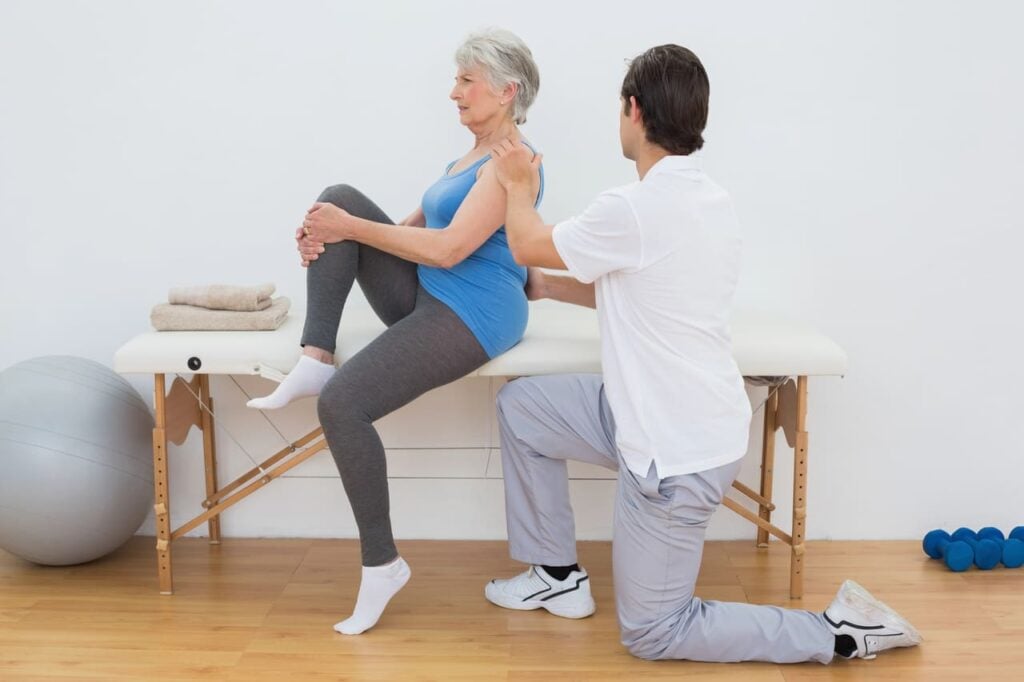
Physiotherapy addresses osteoarthritis through a personalized assessment of how your specific joint is performing within your specific life. A physiotherapist will look at joint range of motion, muscle strength, walking pattern, balance, and functional tasks like stairs, lifting, or returning to a sport. Work demands and activity goals are part of that picture too.
A personalized treatment plan typically includes several components working together:
| Treatment Component | What It Addresses |
| Strength training | Builds support around the joint to reduce load and improve stability |
| Mobility work | Reduces stiffness and helps restore comfortable range of motion |
| Balance and control exercises | Rebuilds movement confidence and reduces risk of compensating poorly |
| Manual therapy | Hands-on techniques to support comfort and joint movement where appropriate |
| Education and activity planning | Pacing strategies, flare-up guidance, footwear, and return-to-exercise planning |
Research published by the NIH on exercise therapy for knee and hip osteoarthritis supports exercise as a core component of OA management, with evidence pointing to improvements in pain and physical function. The Mayo Clinic similarly notes that exercise helps ease arthritis pain and stiffness while supporting joint health over time.
Our physiotherapy team builds programs around your unique needs rather than offering a standard template. Reduced pain, enhanced mobility, and accelerated recovery toward your activity goals are the markers we work toward together.
Which Exercises Help with Osteoarthritis Pain Relief?
The right osteoarthritis pain relief exercises depend on which joint is involved, your current symptoms, your fitness baseline, and what you want to return to doing. There is no single answer, but the broad categories below give a useful starting point.
Range-of-Motion Exercises
Gentle, controlled movement through the joint’s available range reduces stiffness and keeps tissue mobile. These are often most valuable first thing in the morning or after periods of sitting.
Strengthening Exercises
Building strength in the muscles around the affected joint (hip abductors and quadriceps for the knee, rotator cuff muscles for the shoulder, glutes and core for the lower back and hip) directly reduces the stress the joint itself absorbs during movement.
Low-Impact Cardio
Walking, cycling, swimming, and elliptical training support joint health, cardiovascular fitness, and healthy body weight without placing excessive force on sensitive joints. These are often well-tolerated even during active symptoms.
Functional Movement Training
Squatting, stepping, lifting, kneeling, and sport-specific patterns are the movements that matter most in real life. Progressing these gradually, with proper technique and load management, is often a central part of returning to work tasks or weekend sports.
A good working principle: mild discomfort during exercise is common and does not automatically signal harm. Sharp pain, worsening swelling, or symptoms that do not settle within a day or two of activity should prompt a conversation with your physiotherapist about adjustments.
How Do You Keep Doing the Activities You Love During Flare-Ups?
Flare-ups are temporary increases in symptoms that many people with OA experience, often triggered by a change in activity volume, weather, or stress. The answer to a flare-up is almost never to stop everything.
Physio-led strategies for managing flare-ups without abandoning activity include:
- Reducing load or distance temporarily rather than stopping movement entirely
- Using a proper warm-up before activity to prepare the joint for demand
- Building in planned recovery days so tissue has time to adapt
- Modifying a specific movement pattern rather than eliminating the whole activity
- Using strength work between flare-ups to build longer-term joint tolerance
Common patient questions include: Will walking make it worse? Should I stop squatting? Can I still run, golf, or train? The honest answer is that it depends on your specific joint, symptoms, and how the activity is structured. A physiotherapist can help you find a version of what you love that keeps you moving without feeding the pain cycle.
The goal is not to shrink your life around osteoarthritis. It is to build enough capacity to live the life you want.
When Does Physio Help Delay or Reduce the Need for Surgery?
Joint replacement surgery is appropriate for some people with advanced OA, and when it is the right choice, it is worth pursuing. But surgery is not the automatic next step after a diagnosis, and it is not the only path forward for people experiencing significant symptoms.
Non-surgical treatment for osteoarthritis through physiotherapy addresses the functional factors that influence how much pain and limitation you experience: muscle strength, movement quality, joint loading patterns, and activity habits. For many people, improving these factors meaningfully reduces symptoms and improves daily function, which affects how urgently surgery feels necessary.
Physiotherapy cannot reverse advanced structural joint changes, and it does not promise to prevent surgery permanently. What it offers is a proactive step that strengthens your position whether you are hoping to stay active without surgery, preparing your body for a possible future procedure, or wanting to improve how you function right now.
Consider seeking professional support if:
- Pain is regularly limiting work, exercise, sleep, or independence
- Stiffness is progressively worsening
- Your confidence in movement is declining
- Medication alone is not providing adequate relief
- A physician has mentioned surgery and you want to explore conservative options first
Key Takeaways
- Osteoarthritis involves real joint changes, but those changes do not determine your pain level or functional capacity on their own. Muscle strength, movement quality, and activity habits all play a significant role.
- Avoiding movement with OA tends to worsen the situation over time by reducing the muscular support the joint depends on.
- Research supports exercise therapy as a core component of OA management, with evidence for improvements in pain and physical function for knee and hip OA specifically.
- A personalized physiotherapy program typically includes strength training, mobility work, balance exercises, manual therapy, and education rather than a single generic exercise routine.
- Flare-ups are common and manageable; they rarely require stopping all activity, and a physiotherapist can help identify adjustments that keep you moving.
- Physiotherapy is a proactive option whether your goal is staying active, improving daily function, or preparing for a possible future surgical procedure.
Take the Next Step Toward Moving with More Confidence
Osteoarthritis should not get to decide how far you walk, how confidently you train, or how much of your regular life you sit out. At Full Function Rehabilitation & Wellness in Woodbridge, Vaughan, ON, our physiotherapy team assesses your movement, listens to your goals, and builds a personalized osteoarthritis rehabilitation program designed to support reduced pain, enhanced mobility, and stronger daily function.
Book an assessment and take an active step toward moving with more confidence.
Frequently Asked Questions
Can physiotherapy cure osteoarthritis?
Physiotherapy does not cure osteoarthritis or reverse all structural joint changes. It helps many people improve strength, mobility, movement confidence, and day-to-day function through a personalized plan tailored to their joint, symptoms, and goals.
What exercises are good for osteoarthritis pain relief?
The right exercises depend on which joint is affected, your current symptoms, and your activity goals. Most programs include some combination of strengthening, range-of-motion work, low-impact cardio, and functional movement training. A physiotherapist helps identify safe starting points and appropriate progressions based on your situation.
Should I stop exercising if I have osteoarthritis?
Complete rest is rarely the right answer. Reducing activity entirely tends to weaken the muscles that support the joint, which often makes pain and stiffness worse over time. The key is choosing the right type, amount, and intensity of movement, particularly during flare-ups or when symptoms are changing, with guidance from a physiotherapist.