TLDR
Modern physiotherapy combines manual therapy, therapeutic exercise, neuromotor re-education, and modalities into a single, assessment-driven plan built around your body, your goals, and where you are in the healing process. There is no universal treatment that works for everyone. A physiotherapist builds your plan from a thorough assessment and adjusts it as your movement, strength, and function improve.
If you have ever searched “what are the different types of physiotherapy treatments available” and walked away more confused than when you started, you are not alone in that frustration. Lists of techniques mean very little without understanding how they fit together and why one person’s plan looks completely different from another’s.
The short answer is that physiotherapy is not a menu you order from. It is a structured, assessment-driven process that brings together the right combination of hands-on care, targeted movement, movement retraining, and supportive tools at the right time. What works in week one of a sprained ankle recovery is not what drives progress in week six of returning to competitive sport.
This post walks through the core treatment categories used in modern physiotherapy, explains what each one does and when it fits, and shows how they work together inside a plan that changes as your body responds. Whether you are dealing with a workplace injury, a recurring sports issue, or everyday pain that is slowing you down, understanding this framework helps you take an active role in your own recovery.
Why Does Modern Physiotherapy Start With Assessment, Not Treatment?
Before any treatment begins, a physiotherapist needs to understand what is actually happening in your body. A physiotherapy assessment is the clinical roadmap that prevents one-size-fits-all care and shapes every decision that follows.
A thorough assessment typically covers:
- Range of motion and joint mobility
- Muscle strength and endurance
- Balance and coordination
- Posture and movement control
- Pain triggers and symptom patterns
- Functional tasks relevant to your work, sport, or daily life
What the assessment reveals shapes every choice that follows. A fresh acute injury in an early healing stage calls for a very different approach than a long-standing recurring problem in a competitive athlete. Age, activity level, tissue irritability, and your personal goals all influence the plan. Research on musculoskeletal pain reinforces that individualized, assessment-guided care produces more meaningful outcomes than standardized protocols applied broadly. The assessment is not a formality. It is the foundation the entire plan is built on.
How Does Manual Therapy in Physiotherapy Help Your Body Move?
Manual therapy refers to hands-on techniques a physiotherapist uses to help joints, muscles, and soft tissues move more comfortably. It is not a single technique but a collection of approaches applied based on what the assessment reveals.
What Manual Therapy Includes
Common manual therapy techniques in physiotherapy include joint mobilization (gentle, controlled movement applied to a stiff or restricted joint), soft tissue techniques that address muscle tension and fascial restrictions, assisted stretching, and guided movement through limited ranges of motion.
Where It Fits in Your Plan
Manual therapy is often most useful in the earlier phases of recovery, when irritated or stiff tissues benefit from skilled hands-on input to restore comfort and mobility. It prepares the body to move better and respond more effectively to exercise. That said, manual therapy works best as one part of a broader plan. Using it in isolation, without pairing it with active rehabilitation, typically limits how far recovery progresses. Think of it as opening a door, with exercise and movement retraining as the steps you take through it.
How Does Therapeutic Exercise Rebuild Strength and Function?
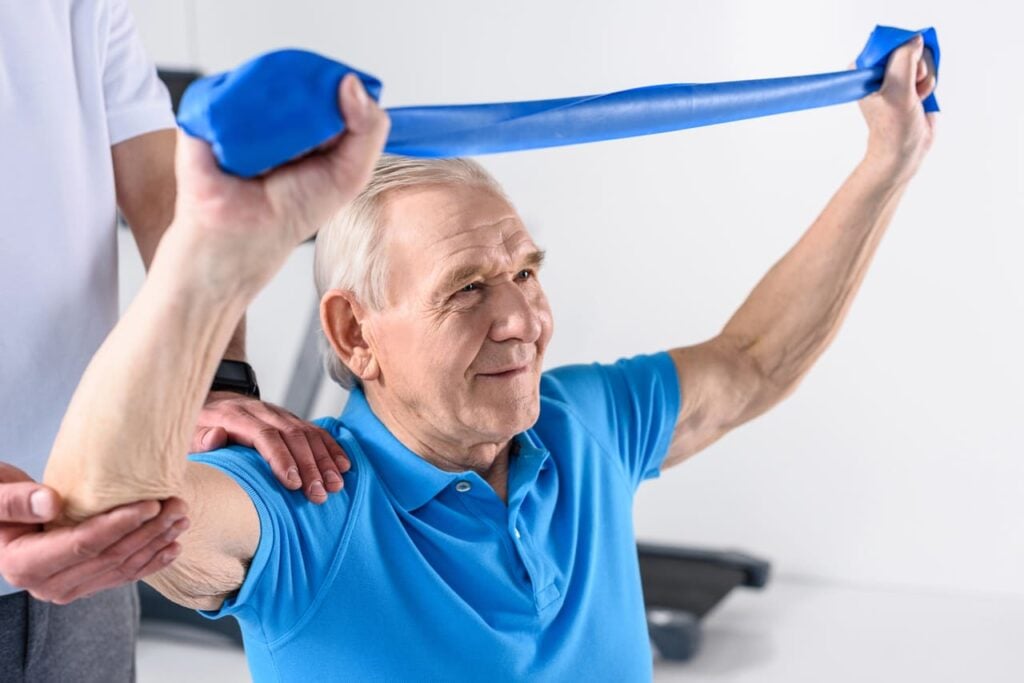
Therapeutic exercise for rehabilitation is targeted movement prescribed to restore strength, mobility, control, endurance, and physical confidence. It is where patients shift from receiving care to actively building capacity.
The principles of exercise rehabilitation emphasize progressive loading, meaning the demands placed on your body increase systematically as your tolerance improves. This is not generic gym programming. Every exercise is chosen to address what the assessment identified and adjusted as your body responds.
Examples Across Activity Levels
| Patient Type | Early Phase Exercises | Later Phase Exercises |
| Workplace injury | Gentle mobility, postural awareness | Workplace conditioning, sustained posture tolerance |
| Weekend athlete | Range of motion, low-load strengthening | Sport-specific loading, agility, return-to-activity drills |
| Everyday pain | Pain-free movement, stability basics | Functional strength, endurance, confidence with daily tasks |
Exercise gives you a direct, active role in your own recovery. It bridges the gap between feeling better in the clinic and moving better in your real life.
What Is Neuromotor Re-Education and When Is It Used?
Neuromotor re-education is the process of retraining the brain, nerves, and muscles to coordinate movement more efficiently. After injury, surgery, prolonged pain, or poor movement habits, the way your body organizes movement often changes in ways that are not immediately obvious.
Your nervous system adapts to protect an injured area, sometimes creating compensation patterns that persist long after the original tissue has healed. Neuromotor re-education addresses these patterns directly.
What It Looks Like in Practice
- Balance training and proprioception work (proprioception is your body’s sense of its own position in space)
- Gait retraining for walking or running mechanics
- Core control and spinal stability exercises
- Landing mechanics for athletes returning to jumping or cutting movements
- Posture and movement cueing for workplace or postural strain
- Coordination drills that challenge the nervous system under progressive conditions
Neuromotor re-education is not about building raw strength. It is about restoring the quality and control of movement so strength and mobility translate into confident, efficient function in real life.
What Physiotherapy Modalities Are Used for Pain Relief?
Modalities are supportive tools used to reduce pain, calm symptoms, or prepare tissues for movement. They are an input to the overall plan, not the plan itself.
Depending on your assessment findings, healing stage, and symptom irritability, a physiotherapist may incorporate tools such as:
- Heat or ice therapy to address tissue temperature and comfort
- Electrical stimulation (such as TENS, which stands for transcutaneous electrical nerve stimulation) to influence pain signals
- Therapeutic ultrasound to address deeper soft tissue layers
- Laser therapy for tissue healing support
- Shockwave therapy for tendon and chronic soft tissue conditions
- Taping techniques to support joints or guide movement
Advances in clinical technology have expanded the range of modality options available to physiotherapists, as outlined in research on how new technology is improving physical therapy. The right choice depends on your condition and goals. Modalities that calm symptoms in an acute flare-up serve a different purpose than those used to address a chronic tendon issue. What remains consistent is that modalities support active rehabilitation; they do not replace it.
How Does a Personalized Physiotherapy Plan Evolve Over Time?
Modern physiotherapy is not static. What your body needs in the first week of treatment is rarely the same as what it needs in the fourth week, and a plan that does not adjust is a plan that falls short.
A general clinical progression looks like this:
- Early phase: Calm pain, protect healing tissues, restore gentle motion. Manual therapy and modalities play a larger role here.
- Middle phase: Rebuild mobility, strength, balance, and movement control. Therapeutic exercise and neuromotor re-education take the lead.
- Later phase: Progressive return to sport, work demands, lifting, running, or daily activity with increasing load and complexity.
These categories do not operate in separate silos. Manual therapy may restore mobility so therapeutic exercise produces better results. Neuromotor re-education ensures that newly built strength translates into coordinated, controlled movement. Modalities reduce symptom interference so active rehabilitation gets the full benefit. Each component reinforces the others.
If pain is currently limiting your work, your sport, your sleep, or your independence, seeking care early generally produces better outcomes than waiting for symptoms to resolve on their own.
Key Takeaways
- Physiotherapy begins with a thorough assessment covering movement, strength, pain patterns, and personal goals before any treatment is chosen.
- Manual therapy uses hands-on techniques to improve joint and soft tissue mobility and is most effective when paired with active exercise, not used alone.
- Therapeutic exercise for rehabilitation is prescribed and progressed based on your healing stage, activity demands, and how your body responds over time.
- Neuromotor re-education retrains the nervous system to coordinate movement more efficiently, addressing compensation patterns that persist after tissue healing.
- Modalities such as electrical stimulation, laser therapy, and shockwave therapy support the overall plan by managing symptoms and preparing tissues for movement.
- A personalized physiotherapy treatment plan changes across recovery phases, with different tools taking priority as strength, mobility, and function improve.
Take the Next Step Toward Moving Well Again
Pain, stiffness, and recurring injury have a way of quietly narrowing what you do, what you attempt, and how freely you move through your day. That narrowing is not inevitable.
A personalized physiotherapy assessment gives you a clear picture of what your body needs now and how your plan should progress as function improves. Whether you are recovering from a workplace injury, returning to sport, or addressing pain that has gone on longer than it should, the right plan starts with understanding your body specifically, not generally.
If you are in Woodbridge, Vaughan, or the surrounding area, Full Function Rehabilitation & Wellness is ready to help you take that next step. Accelerated recovery, enhanced mobility, and reduced pain are built into every treatment plan we create around your goals. Book an assessment to find out which physiotherapy treatments are right for your injury, your lifestyle, and your return-to-activity goals.
Frequently Asked Questions
What are the different types of physiotherapy treatments available?
Common physiotherapy treatments include manual therapy, therapeutic exercise, neuromotor re-education, modalities for pain relief, movement retraining, and patient education. The right combination depends on your assessment findings, symptoms, healing stage, and personal goals. No two plans look exactly the same.
Is manual therapy better than exercise for recovery?
Manual therapy and exercise serve different roles and are often most effective when used together. Manual therapy addresses comfort and mobility, while therapeutic exercise rebuilds strength, control, and long-term function. Most personalized physiotherapy treatment plans use both, with the balance shifting as recovery progresses.
How does a physiotherapist decide which treatments I need?
A physiotherapist reviews your pain, movement quality, strength, injury history, work and sport demands, and goals before building a plan. That plan is not fixed; it is adjusted regularly as your body responds, your symptoms change, and your function improves across the phases of recovery.