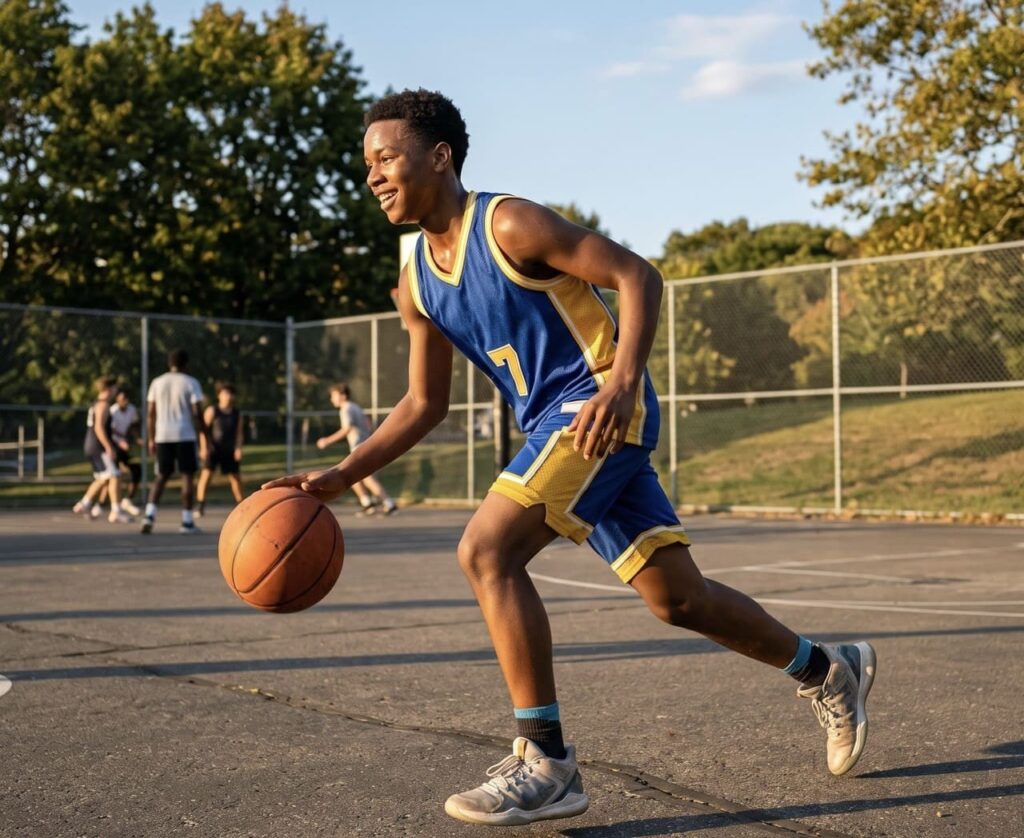
Osgood-Schlatter is a growth-related knee condition — not permanent damage — and most teenage athletes recover without surgery through load management, targeted strengthening, and gradual return to sport. The goal is not to shut down training entirely but to reduce the forces that irritate the knee while keeping fitness and confidence intact. With a personalized plan and patience, many teens return to full sport activity as symptoms settle.
The moment a knee starts hurting on the stairs, mid-sprint, or at the bottom of a squat, a young athlete’s first thought is often the worst one: something is broken, something is damaged, something is wrong in a way that will not go away. That fear is understandable. A tender, sometimes visible bump below the kneecap is not subtle, and the pain during practice feels like a serious warning.
The good news is that the question “how to cure Osgood Schlatter” is actually the wrong question, and a better framing opens up far more productive options. The real question is: how do you reduce the load on an irritated growth area, maintain as much fitness as possible, and return to sport without repeatedly provoking symptoms? That is what this guide addresses.
You will find a plain-language explanation of what is happening in the knee, what drives flare-ups, practical daily strategies, an overview of exercise progressions, a realistic picture of how long symptoms tend to last, and clear guidance on when a professional assessment is the right next step.
Should You Be Worried About Surgery?
For most teenage athletes, surgery is not the starting point and rarely becomes necessary. That is worth saying clearly before anything else, because the fear of permanent damage or an operating table can make athletes (and parents) feel as though nothing short of a drastic fix will work.
What is actually happening involves the part of the shin bone (tibia) where a major knee tendon attaches just below the kneecap. During growth spurts, this attachment point is still developing, and repeated high-force activities — sprinting, jumping, kicking, deep squatting — place significant pulling stress on a structure that is not yet fully hardened. The result is localized pain and sometimes a bony bump at that site. This is what clinicians mean by a growth plate irritation.
A clinical review published on NIH confirms that conservative care — meaning non-surgical approaches — is the standard starting point, with surgery considered only in a narrow set of cases where symptoms persist well after growth is complete and other options have not helped.
That does not mean ignoring the pain. Pushing through sharp, escalating discomfort without adjusting training is a different situation from guided, modified activity. The distinction matters enormously for how quickly things improve.
How Do You Manage Load Without Abandoning Sport?
Think of training stress on the knee like volume through a speaker. The problem is not the sound; it is the volume level relative to what the speaker can handle without distorting. The solution is rarely silence. It is finding the right level.
Load management means identifying the current volume of activity the knee tolerates without creating a flare that lingers into the next day. Early research on adolescent athletes with this condition showed that modifying sport participation, rather than eliminating it entirely, was a practical approach to recovery. That principle still holds.
Here is what that looks like in practice:
- Swap repeated jump drills for skill work, shooting practice, cycling, pool-based conditioning, or upper-body training when symptoms are actively irritated.
- Reduce back-to-back practice sessions, tournament clusters, or sudden spikes in sprint volume before considering removing sport entirely.
- Use a simple three-part pain check: what produces pain during the activity, what settles within an hour afterward, and what feels worse the following morning.
A physiotherapy assessment removes the guesswork. Rather than choosing between total rest and full training, a personalized plan identifies which activities to scale back, which to keep, and how to progress week by week.
What Does Your Pain Pattern Actually Tell You?
Before choosing any exercise or activity modification, it helps to understand your own symptom pattern rather than relying on general advice that does not account for your specific sport, schedule, or body.
Common triggers include kneeling, descending stairs, squatting, jumping, hill running, rapid direction changes, and kicking. Symptoms often flare during growth spurts or at the peak of a busy sport season, then partially settle during breaks, only to return when training ramps back up.
A thorough assessment looks at more than just the sore spot. It typically includes:
| Assessment Area | What It Examines |
| Local knee findings | Tenderness and swelling around the tendon attachment site |
| Flexibility | Quadriceps, hip flexors, hamstrings, and calves |
| Movement control | Landing mechanics, squat alignment, and single-leg stability |
| Training load | Weekly sport schedule, recent volume changes, and surface type |
Some symptoms require prompt attention. Sudden significant swelling, inability to bear weight, a locking sensation in the knee, fever alongside knee pain, pain that wakes you at night, or pain following a traumatic impact should all be assessed promptly rather than managed with activity modification alone. The Merck Manual notes that this condition is diagnosed in the context of a young, growing athlete, so ruling out other causes of knee pain is part of a responsible assessment.
What Does a Practical Osgood-Schlatter Pain Relief Plan Include?
Understanding how to treat Osgood-Schlatter disease is less about one specific solution and more about consistent daily decisions that accumulate over weeks.
Practical options to discuss with a clinician or parent and guardian include:
- Applying ice to the area after painful activity, if it provides relief, for short periods.
- Temporarily reducing high-impact drills rather than stopping all sport participation.
- Using a kneepad for kneeling activities during sport or at school.
- Considering a supportive strap or taping approach if appropriately fitted and recommended.
- Using medication only with appropriate medical or parental guidance.
Consistency beats intensity here. The athlete who follows a moderate, repeatable plan throughout school days, practices, games, and rest days will generally progress more steadily than one who applies a treatment sporadically. Communicate openly with coaches about drill modifications; staying present in the team environment supports both mental engagement and physical recovery.
Which Osgood-Schlatter Exercises Build Capacity?
Osgood-Schlatter exercises are most useful when treated as a progression, not a static routine to repeat indefinitely. The goal is to rebuild the knee’s capacity to handle sport load, not only to reduce pain in the short term.
Mobility Work
Gentle flexibility work targeting the quadriceps, hip flexors, hamstrings, and calves reduces the overall demand placed on the affected area during sport. Avoid aggressive pulling or stretching that creates sharp pain at the attachment site.
Isometric Strengthening
Isometric exercises involve muscle contractions without joint movement. These are often well-tolerated early in recovery when dynamic movement is still sensitive, and research supports their role in building tendon tolerance gradually.
Hip and Core Control
Stronger glutes, better trunk stability, and improved single-leg balance reduce the forces that travel through the knee during running and jumping. This category of training is often underemphasized but meaningfully reduces knee overload in sport contexts.
Progressive Quad Strengthening
As symptoms allow, gradual quadriceps loading helps rebuild the strength needed for full sport participation. Progression should be guided by pain response, not a fixed schedule.
Return-to-Sport Movement Patterns
Controlled reintroduction of jumping, cutting, and sprinting mechanics is the final phase. Rebuilding these movement patterns carefully, rather than jumping back to full intensity, protects against re-aggravation.
A useful rule throughout: if an exercise creates a strong flare that persists into the next day, it is too much load at that point in recovery. The aim is to build confidence through progress, not to wait passively for pain to disappear on its own.
How Long Does Osgood-Schlatter Last?
How long Osgood-Schlatter lasts varies between individuals, and pinning recovery to a calendar date rarely serves athletes well. A milestone-based approach is more useful and more honest.
- Daily walking and stairs are comfortable without lingering soreness.
- Modified practice is tolerated without next-day escalation in symptoms.
- Strength and control are improving comparably on both sides.
- Jumping, sprinting, and directional changes return gradually and without significant flare.
- Full practice intensity precedes full competition demands.
For many teenagers, symptoms ease as growth slows and the attachment site matures. Some athletes notice flare-ups during growth spurts or periods of heavy training, with relative calm in between. Patience in this context is an active strategy: the athlete continues to train smartly, build strength, and protect future performance rather than simply waiting.
If symptoms are severe, show no meaningful improvement with appropriate care over a reasonable period, or raise concern about another diagnosis, a further medical review is the right step.
Key Takeaways
- Osgood-Schlatter is a growth-related knee condition involving the tendon attachment site on the shin bone; it is not permanent structural damage in most cases.
- Surgery is rarely the starting point; conservative care through load management and progressive strengthening is the standard approach for adolescent athletes.
- Load management means finding the activity level that does not provoke a lasting next-day flare, rather than stopping sport entirely.
- A personalized assessment looks at flexibility, movement mechanics, training volume, and local knee findings to build a plan suited to the individual athlete.
- Red flag symptoms including major swelling, inability to bear weight, locking, fever, night pain, or post-trauma pain require prompt professional assessment rather than self-management.
- Recovery is better tracked by functional milestones (comfortable stairs, tolerated practice, improved strength) than by a fixed number of weeks.
Reclaim Confidence in Sport With a Personalized Knee Plan
Knee pain should not be what ends a promising athletic season or forces a young athlete to the sidelines indefinitely. If Osgood-Schlatter pain is limiting sport, school stairs, training sessions, or everyday movement, a physiotherapy assessment is a practical next step.
At Full Function Rehabilitation & Wellness in Woodbridge, Vaughan, our team works with active teens and their families to assess what is driving symptoms and build a plan grounded in their specific sport, schedule, and goals. Personalized treatment plans, dedicated therapists, and a clear return-to-activity strategy support accelerated recovery, enhanced mobility, and reduced pain over time.
Ready to get a clearer picture of what is happening and what to do next? Book a physiotherapy assessment at our Woodbridge location and take the first step toward returning to sport with confidence.
Frequently Asked Questions
How do you treat Osgood-Schlatter without stopping sports completely?
Total shutdown is rarely necessary and often counterproductive. The goal is typically to identify which activities overload the knee and reduce those specifically, while keeping safe movement, strength work, and conditioning in the plan. Many athletes continue modified practice, skill-based drills, and lower-impact conditioning throughout recovery. A physiotherapy assessment helps determine what to scale back and what to keep, based on the individual athlete’s pain pattern and sport demands.
Is Osgood-Schlatter permanent?
For the large majority of teenagers, Osgood-Schlatter is not permanent. It is closely tied to growth and sport load in adolescence, and symptoms commonly improve as the skeleton matures and growth slows. That said, symptoms that are severe, worsening, or significantly limiting daily activity deserve professional assessment rather than a wait-and-see approach.
What are the most effective Osgood-Schlatter exercises?
The right exercises depend on the individual athlete’s pain level, sport type, current strength, flexibility, and movement habits, so there is no universal list that works for everyone. Common plans tend to include quadriceps and hip flexor mobility, isometric strengthening during sensitive periods, glute and core stability work, progressive quad loading, and gradual return to jumping and running mechanics. A physiotherapist builds these progressions based on how symptoms respond, not a fixed formula.