If you’re dealing with persistent joint, tendon, or muscle pain, and traditional treatments haven’t provided full relief, you might be exploring new options. One evidence-based, non-invasive treatment gaining attention is shockwave therapy.
This post will help you understand how shockwave therapy works, what to expect during sessions, and how it functions as part of a larger plan for musculoskeletal pain management. We’ll explain the science behind it and how it fits within physiotherapy-led care to support your recovery and long-term function.
What Is Shockwave Therapy?
Shockwave therapy, also known as extracorporeal shock wave therapy (ESWT), uses controlled acoustic energy to stimulate repair activity in painful soft tissue. It’s used to support healing in musculoskeletal conditions like plantar fasciitis, tendinopathies, calcific shoulder tendinitis, or chronic muscle tension.
There are two types of shockwave therapy:
- Focused shockwaves: Penetrate deeper into the tissue and are often used for more localized or chronic conditions.
- Radial shockwaves: Spread more superficially and are typically used for larger treatment areas.
Shockwave therapy was first introduced in the 1980s for breaking up kidney stones. Since then, research has supported its role in treating soft tissue and bone-related pain without the need for surgery or injection-based treatments.
The Science of Shockwave Therapy
The therapeutic effect of shockwave therapy stems from how the acoustic waves interact with your tissues. When applied to painful areas, these high-pressure sound waves stimulate increased blood flow, break down calcified fibroblasts, and promote cellular regeneration. This can activate a natural repair process, reducing pain and supporting improved function over time.
A systematic review published by the NIH confirms that shockwave therapy shows measurable outcomes in conditions like plantar fasciitis, lateral epicondylitis (tennis elbow), and Achilles tendinopathy. Patients experienced improved function and reduced pain scores with consistent treatment. Another NIH-backed review further supports these effects while highlighting positive outcomes with low risk for complications when provided under the right protocols.
Shockwave therapy is not based on guesswork. It’s evidence-informed and designed to support the mechanical and biochemical healing processes already active in your body.
Preparing for a Shockwave Therapy Session
If we recommend shockwave therapy as part of your treatment plan at Full Function Rehab & Wellness, here’s what you can expect:
Before Your First Appointment:
- Wear comfortable clothing that allows access to the area being treated.
- Avoid taking anti-inflammatory medications on the day of treatment, as they may interfere with the natural healing response triggered by the therapy.
- Plan for 15 to 30 minutes, depending on the condition and area being addressed.
During the Session:
| Step | What You’ll Experience |
| Assessment | Your physiotherapist will locate the pain area, assess tissue sensitivity, and track progress. |
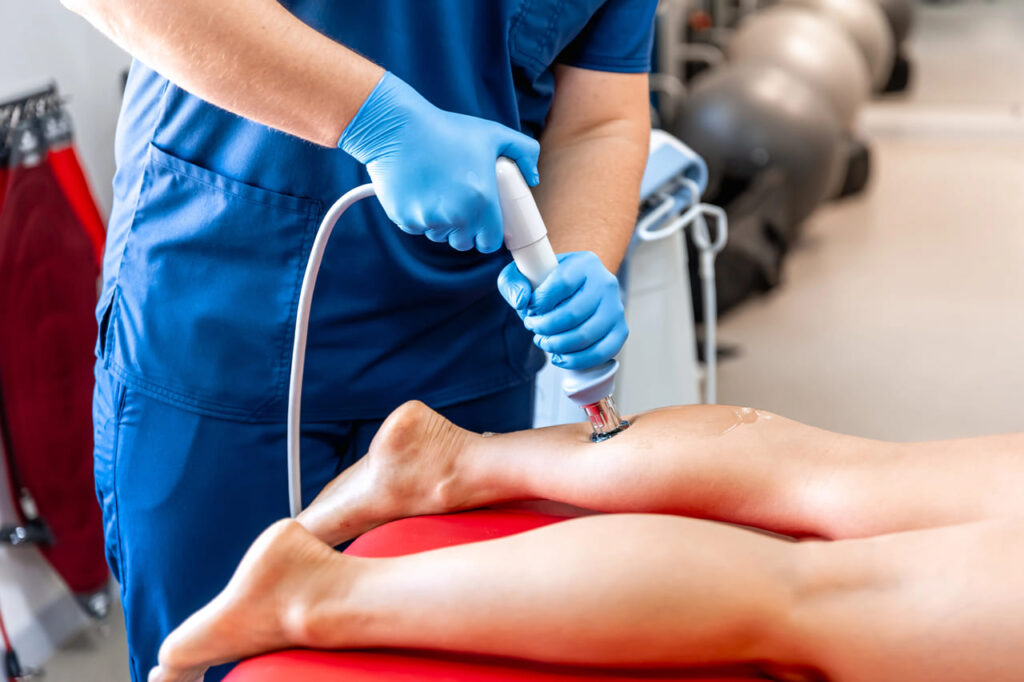
| Application | A handheld device delivers pulses directly to the treatment site. Some mild discomfort may be felt, but it’s brief and adjustable. |
| Post-Treatment | Instructions will be reviewed, including activity limitations if necessary. Most people resume normal activity the same day. |
Integrating Shockwave Therapy with Physiotherapy
Shockwave therapy is rarely used on its own. At Full Function Rehab & Wellness, we integrate it into a broader plan that includes strength work, posture correction, manual therapy, and education. This is especially important if the pain is due to movement dysfunctions, overuse, or poor biomechanics.
Our patients often benefit from combining physiotherapy shockwave treatment with other non-invasive strategies. We address your pain at its source, not just the symptoms. This multidisciplinary model involves physiotherapists, chiropractors, and other healthcare professionals collaborating to provide complete care for your recovery.
If you’ve experienced symptoms for months or years, improving tissue quality alone isn’t enough. Progress happens faster when we also help you build strength, improve mobility, and learn how to protect your progress long-term. You can explore some of these strategies in our blog posts on relieving pain with physiotherapy and clinical tools for managing chronic pain.
Managing Expectations: What Shockwave Therapy Can and Cannot Do
Like any treatment, shockwave therapy has benefits and limitations. It’s a tool, not a cure. We use it to support healing when there’s chronic irritation, scar tissue, or poor tissue circulation—but it needs to be part of a strategy.
What shockwave therapy supports:
- Pain relief from chronic or persistent musculoskeletal conditions
- Improved blood flow and tissue repair at the treatment site
- Reduced muscle tightness and localized inflammation
- Faster recovery when combined with therapeutic exercise
What shockwave therapy does not do:
- Replace the need for proper movement, exercise, or load management
- Offer instant results—typically, relief builds gradually over a series of sessions
- Treat every type of pain—some conditions require different types of therapy
As supported in a Mayo Clinic article, finding the right candidates, applying the right dose, and combining therapies lead to the most effective outcomes. That’s why we always begin with a detailed assessment and build a treatment plan specific to your diagnosis and goals.
Take the Next Step Toward Pain Relief
If discomfort in your tendons, muscles, or joints is keeping you from living actively, there are options beyond medication or surgery. At Full Function Rehab & Wellness, we build comprehensive care plans that include shockwave therapy when appropriate. We’ll assess your condition in depth and guide you on what therapies fit your situation best.
Contact us today to schedule a consultation with our team and learn how we can help you move forward with clarity and confidence.
Frequently Asked Questions
Is shockwave therapy painful?
Mild discomfort during treatment is common, especially if the area is very sensitive. Most people describe it as tolerable, and the intensity can be adjusted during the session if needed.
How many sessions of shockwave therapy are typically needed?
Most conditions respond within 3 to 6 sessions. However, this depends on the severity and duration of the issue, as well as how well shockwave therapy is combined with other treatment approaches.
Can shockwave therapy be used for all types of musculoskeletal pain?
Shockwave therapy is not suitable for every diagnosis. It is often effective for tendon or soft tissue irritation but less appropriate for structurally unstable injuries or conditions needing surgical intervention. We always assess your unique condition first before including it in a care plan.