TL;DR
Targeted lower-body strengthening combined with dynamic balance drills significantly reduces fall risk in seniors by improving reflexes, stability, and functional movement patterns. Research shows that exercises focusing on leg strength, ankle stability, and reactive balance can reduce fall rates by up to 32% when practiced consistently at home with proper guidance from physiotherapy professionals.
───────────────────────────────────────────────
Why Fall Prevention Matters for Your Independence
Every year, thousands of seniors face the devastating impact of falls, with many losing confidence in their ability to move safely through their own homes. The statistics are sobering: one in four adults aged 65 and older experiences a fall annually, and these incidents often mark the beginning of a decline in independence and quality of life.
I understand the fear that comes with feeling unsteady on your feet. That moment of uncertainty when you reach for something or navigate stairs creates anxiety that affects how you live your daily life. The good news is that targeted lower-body strengthening and dynamic balance training offer a proven path forward, helping you build the physical foundation needed to move with confidence again.
This guide focuses on specific exercises and drills designed to strengthen your legs, improve your reflexes, and enhance your ability to recover from unexpected movements. You’ll learn practical strategies you can implement at home while understanding when professional assessment and support become essential for your safety and progress.
How Does Lower-Body Strength Protect You From Falls?
Your leg muscles serve as your body’s primary shock absorbers and stabilizers, working constantly to keep you upright and balanced. When these muscles weaken, your risk of falling increases dramatically because your body loses its ability to respond quickly to unexpected movements or environmental challenges.
Research published in the National Institutes of Health demonstrates that targeted exercise interventions focusing on lower-body strength can reduce fall rates by 21% to 32% in older adults. The study emphasizes that consistent strengthening of key muscle groups creates measurable improvements in stability and functional mobility.
The most critical areas for fall prevention include:
• Quadriceps muscles: These front thigh muscles control your ability to rise from chairs, climb stairs, and maintain knee stability during walking
• Glutes and hip muscles: Essential for side-to-side stability and preventing hip fractures during falls
• Calf muscles and ankles: Provide the fine motor control needed for balance adjustments and push-off power during walking
• Core stabilizers: Support your posture and help coordinate movement between your upper and lower body
When these muscle groups work together effectively, they create a strong foundation that allows your body to automatically adjust to uneven surfaces, sudden direction changes, or moments when you lose your balance. This automatic response system becomes your first line of defense against falls.
What Are Dynamic Balance Drills and Why Do They Work?
Dynamic balance drills train your body to maintain stability while moving, which differs significantly from static balance exercises where you simply stand still. These movement-based exercises teach your muscles and nervous system to work together in real-time, mimicking the challenges you face in daily life.
Unlike holding a static position, dynamic balance training involves controlled movements that challenge your stability while you’re in motion. This approach better prepares your body for real-world scenarios like stepping around obstacles, reaching for items, or recovering from a stumble.
Mayo Clinic research on balance exercises shows that dynamic training improves your body’s ability to make rapid balance corrections, which is crucial for preventing falls when you encounter unexpected situations.
Safe Dynamic Balance Exercises for Home Practice
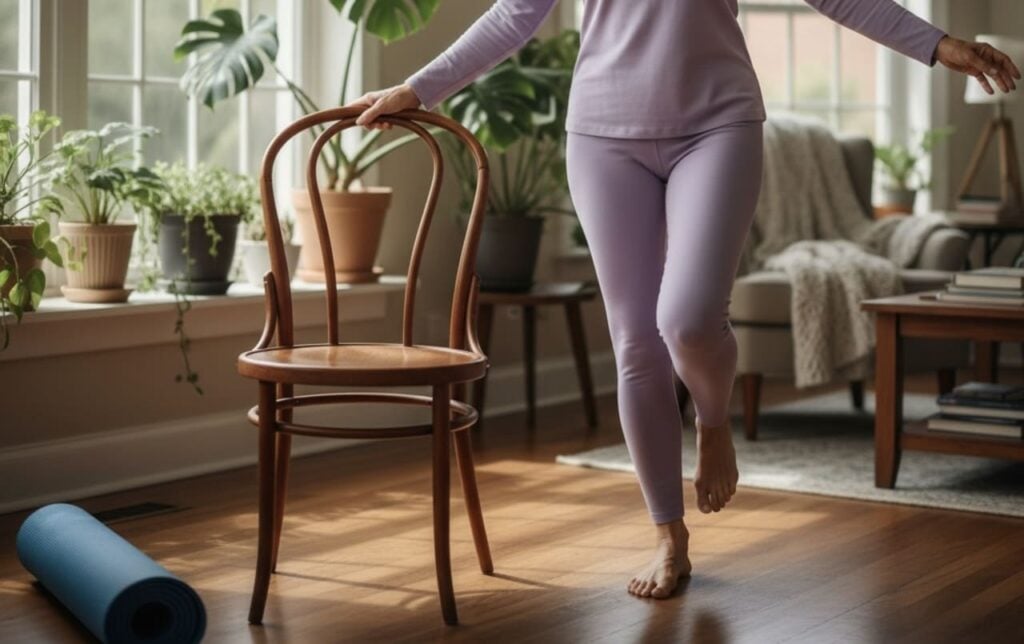
Start with these beginner-friendly exercises, using a sturdy chair or wall for support as needed:
• Marching in place: Lift your knees to hip height while maintaining good posture, focusing on controlled movements
• Side steps: Step sideways along a wall, maintaining contact with one hand while stepping with control
• Heel-to-toe walking: Walk in a straight line placing your heel directly in front of your opposite toe
• Gentle weight shifts: Shift your weight from one foot to the other while standing, then progress to lifting one foot slightly
• Clock reaches: Stand on one foot and reach your free leg to different “clock positions” around your body
How Do You Design a Safe Exercise Routine at Home?
Creating an effective fall prevention routine requires careful attention to your current abilities, medical history, and specific risk factors. The key lies in starting conservatively and progressing gradually while maintaining proper form and safety precautions.
Begin with a thorough self-assessment or professional evaluation to identify your baseline strength and balance capabilities. This assessment should consider factors like medication effects, vision changes, previous falls, and any existing medical conditions that affect your stability.
Essential Safety Guidelines
| Safety Element | Implementation |
|---|---|
| Support Systems | Always have a sturdy chair, wall, or countertop within arm’s reach |
| Progression Rate | Increase difficulty by 10-20% weekly, never advancing if you feel unsteady |
| Exercise Frequency | Practice 3-4 times per week with rest days for muscle recovery |
| Duration | Start with 10-15 minutes, gradually building to 30 minutes |
| Environmental Setup | Clear space of obstacles, ensure good lighting, wear appropriate footwear |
Your routine should include both strengthening exercises and balance challenges, alternating between the two throughout your session. Focus on quality over quantity, ensuring each movement is controlled and purposeful rather than rushing through repetitions.
Why Does Professional Support Make a Difference?
While home exercises form the foundation of fall prevention, working with experienced physiotherapy and rehabilitation professionals provides crucial advantages in assessment, program design, and ongoing progress monitoring.
Studies on balance and strength-based exercise interventions show that professionally guided programs achieve significantly better outcomes than self-directed approaches, particularly for seniors with multiple risk factors or previous fall history.
Professional assessment identifies specific deficits you might not recognize on your own. A thorough evaluation examines your gait pattern, reaction time, muscle strength imbalances, and environmental risk factors that contribute to fall risk. This comprehensive approach allows for targeted interventions that address your unique needs.
Multidisciplinary teams combine expertise from physiotherapists, occupational therapists, and other specialists to create comprehensive fall prevention strategies. This collaborative approach ensures that your exercise program integrates with other aspects of your health management, including medication reviews, vision care, and home safety modifications.
How Do You Stay Motivated and Consistent?
Consistency determines the success of your fall prevention program more than any other factor. Research shows that the protective benefits of exercise diminish quickly without regular practice, making long-term adherence essential for maintaining your safety and independence.
Track your progress using simple measurements like how long you balance on one foot, how many repetitions you complete, or how confident you feel during daily activities. These concrete markers help you recognize improvement and maintain motivation during challenging periods.
Integrate exercises into your daily routine by linking them to existing habits. Practice balance exercises while brushing your teeth, do calf raises while waiting for coffee to brew, or perform marching exercises during television commercial breaks. This approach makes consistency easier to maintain.
Set realistic expectations and celebrate small victories. Improvement in balance and strength occurs gradually, and recognizing incremental progress helps maintain your commitment to the program. Focus on functional improvements like feeling more confident on stairs or being able to reach items on high shelves safely.
Key Takeaways
• Targeted lower-body strengthening exercises focusing on quadriceps, glutes, calves, and core muscles reduce fall risk by up to 32% when practiced consistently
• Dynamic balance drills that incorporate movement are more effective than static balance exercises for preventing real-world falls
• Safe home exercise programs should include proper support systems, gradual progression, and attention to environmental factors
• Professional assessment and guidance significantly improve outcomes compared to self-directed exercise programs
• Consistency in exercise practice is more important than intensity, with 3-4 sessions per week providing optimal benefits
• Integrating exercises into daily routines and tracking measurable progress helps maintain long-term adherence and motivation
Take the First Step Toward Safer Independence
If you’re concerned about unsteadiness or want to proactively protect your independence, professional assessment provides the foundation for effective fall prevention. A comprehensive evaluation identifies your specific risk factors and creates a personalized program designed to address your unique needs and goals.
At Full Function Rehab & Wellness, our multidisciplinary team specializes in fall prevention programs that combine evidence-based exercises with ongoing support and monitoring. We understand the importance of maintaining your independence at home and work with you to develop practical strategies that fit your lifestyle and abilities.
Don’t wait for a fall to take action. Contact our Edmonton South clinic today to schedule your fall prevention assessment and take the first step toward building the strength, balance, and confidence you need to live safely and independently.
Frequently Asked Questions
What are some simple lower-body strength exercises seniors can do at home safely?
Start with chair-supported squats, calf raises while holding a counter, and seated leg extensions. These exercises target major leg muscles while providing stability support. Begin with 5-10 repetitions and gradually increase as your strength improves, always ensuring you have something sturdy to hold onto for balance.
How do dynamic balance drills help reduce the risk of falling?
Dynamic balance drills train your body to maintain stability while moving, which better prepares you for real-life situations like stepping around obstacles or recovering from stumbles. These exercises improve your reflexes and teach your muscles to work together automatically, creating faster and more effective responses to balance challenges compared to static balance training alone.
When should I consider consulting a physiotherapist for fall prevention support?
Consult a physiotherapist if you’ve experienced any falls in the past year, feel unsteady during daily activities, have multiple medical conditions affecting balance, or want a professional assessment of your fall risk factors. Professional guidance is especially important if you have complex health conditions or take medications that affect balance and coordination.